
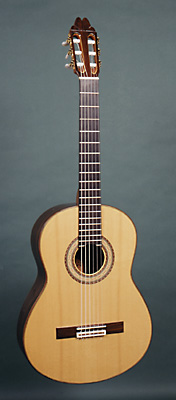
Welcome to the fantastic world of classical guitar. In this site, you will find classical guitar pieces, in midi format, for one and more guitars: actually 5641 MIDI files from 96 composers. Information on how to create midi files and a tutorial on the tablature notation system is presented. Images of ancient guitars provided.
|
|
In Seta , Alessandro Baricco has created a novel that is both a tribute to the power of desire and a exploration of the complexities of human identity. Through his use of language, imagery, and narrative structure, Baricco creates a dreamlike atmosphere that blurs the lines between reality and fantasy. The narrator's infatuation with Seta serves as a kind of catalyst, revealing the fragility and ambiguity of human identity.
For example, the city in which the novel is set is a place of eerie beauty, with its fog-shrouded streets, ornate bridges, and crumbling architecture. This cityscape serves as a kind of backdrop for the narrator's fantasies, a place where reality and fantasy blend together. As the narrator wanders through the city, he becomes lost in a world of his own creation, a world that is both alluring and unsettling.
Baricco, A. (1996). Seta . Torino: Einaudi.
One of the most striking features of Seta is its blurring of reality and fantasy. The narrator's perceptions of Seta and the world around him are filtered through his own desires and fantasies, creating a dreamlike atmosphere that is both seductive and disorienting. Baricco achieves this effect through his use of imagery and symbolism, which creates a sense of fluidity and transformation.
Seta herself is also a figure of ambiguous identity. Her past is mysterious, and her motivations are unclear. Is she a real person or a fantasy figure? Does she exist independently of the narrator's imagination, or is she a projection of his own desires? Baricco leaves these questions unanswered, preferring to maintain a sense of ambiguity and uncertainty.
Please let me know if you want me to make any changes to this paper.
Composers are grouped in 6 pages: A-B;
C-F;
G-L;
M-O;
P-R; S-Z .
J.-S.
Bach , A.
Barrios Mangore , N. Coste
, M. Giuliani , F.
Sor and F.
Tarrega are on their own page
Click here
to listen to 20 great MIDI from the site
Composers in alphabetical order
In Seta , Alessandro Baricco has created a novel that is both a tribute to the power of desire and a exploration of the complexities of human identity. Through his use of language, imagery, and narrative structure, Baricco creates a dreamlike atmosphere that blurs the lines between reality and fantasy. The narrator's infatuation with Seta serves as a kind of catalyst, revealing the fragility and ambiguity of human identity.
For example, the city in which the novel is set is a place of eerie beauty, with its fog-shrouded streets, ornate bridges, and crumbling architecture. This cityscape serves as a kind of backdrop for the narrator's fantasies, a place where reality and fantasy blend together. As the narrator wanders through the city, he becomes lost in a world of his own creation, a world that is both alluring and unsettling. alessandro baricco seta pdf
Baricco, A. (1996). Seta . Torino: Einaudi. In Seta , Alessandro Baricco has created a
One of the most striking features of Seta is its blurring of reality and fantasy. The narrator's perceptions of Seta and the world around him are filtered through his own desires and fantasies, creating a dreamlike atmosphere that is both seductive and disorienting. Baricco achieves this effect through his use of imagery and symbolism, which creates a sense of fluidity and transformation. For example, the city in which the novel
Seta herself is also a figure of ambiguous identity. Her past is mysterious, and her motivations are unclear. Is she a real person or a fantasy figure? Does she exist independently of the narrator's imagination, or is she a projection of his own desires? Baricco leaves these questions unanswered, preferring to maintain a sense of ambiguity and uncertainty.
Please let me know if you want me to make any changes to this paper.
Note to MIDI sequence contributors
Your submissions are welcomed.
Please send them by e-mail (end of text). Pieces
should bear the composer's name and be properly identified.(ex.: J.K. Mertz (1806-1856) Nocturne
Op.4 No.2.). The submissions
should bear information on the transcriber or arranger when available. The submitter's name
will appear beside the accepted submission.
This site exists primarily to showcase pieces written for the classical
guitar. Established and recognized transcriptions and arrangements (e.g.,
Tarrega, Segovia,..) of pieces written by non-guitar composers will also be given
high priority.
New compositions for the classical guitar are also welcomed. New
compositions that meet quality guidelines will be added to the site. For
new contributors, it would be appreciated if you would also submit several
pieces by known composers in addition to your own compositions. This will
help to expand the repertoire of established works for the classical guitar in
addition to expanding the repertoire of new music.
Last update: March 8 2026
Copyright François Faucher 1998-2025
 G.F.Handel's Sonata 2. Allegro
3.Adagio HWV368
G.F.Handel's Sonata 2. Allegro
3.Adagio HWV368